Archive standard 1 inch Type C video transfer in Sweden by experienced technicians
Professional 1 Inch Type C Digitization €230 per reel including Swedish 25% VAT. Will be deducted if you have a EU VAT number.
• 1 Inch Type C videotape digitization for archives, broadcasters and production companies within the European Union.
• No customs, no import duties and insured shipping within the EU. We book door to door shipment with DHL for you unless you prefer another carrier.
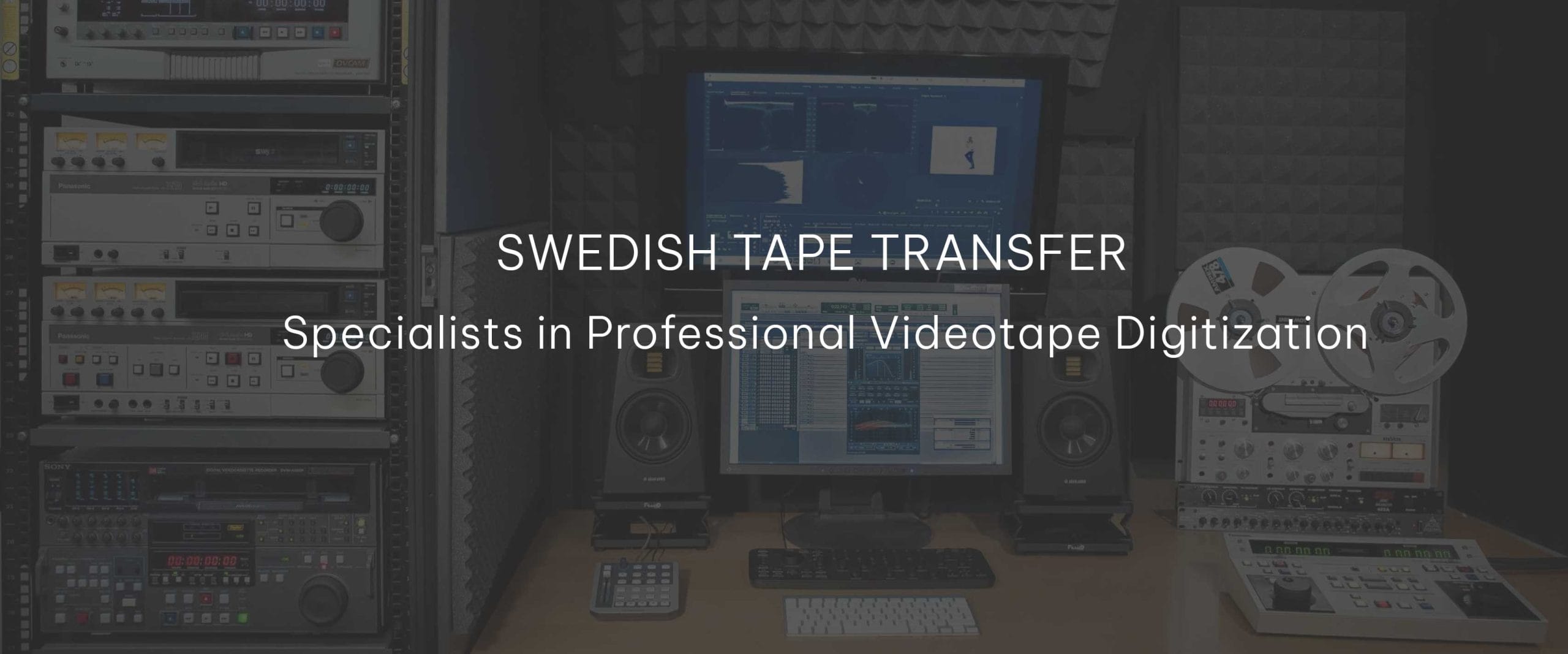
• We operate both a Sony BVH and an Ampex VPR 1 Inch Type C videotape recorder in fully restored, excellent working condition.
• Original built in TBC:s for line stage sync, external full frame TBC from Snell & Wilcox or Datavideo TBC-3000.
• AJA Kona capture card.
• We are among the very few studios in Northern Europe operating both a Sony BVH and an Ampex VPR in professionally restored working condition.
Our Ampex VPR is equipped with a 14-inch reel adapter kit, enabling playback of reels with a running time of up to three hours.
Our machines support recordings with Dolby A, Dolby C and Dolby SR noise reduction.
Unless otherwise agreed, your recordings are delivered as Apple ProRes 422 files.
For long-term preservation, we also offer digitization in accordance with IASA archival recommendations. Master files can be delivered as:
• Uncompressed 10-bit QuickTime (.mov)
• Losslessly compressed Matroska (.mkv) using the FFV1 codec
Please contact us for a quotation if you require archival master files.
• We also have extensive experience in baking videotapes affected by Sticky Shed Syndrome (SSS) using our purpose-built, temperature-controlled tape oven. This treatment is often essential for the safe playback of deteriorated Ampex 456 tapes and other susceptible tape formulations before digitization.
Don’t hesitate to contact us with any questions, big or small.
 info@raddabanden.nu
 +46608 22 20
We’re located in Vendelsö 20 km south east of Stockholm City. The studio is run by experienced broadcast engineers who work regularly with Sveriges Television (SVT), Swedish Radio, and the majority of Swedens television and production companies. In addition to these, museums and archives are also among our clients for media digitization services. We have one foot left in the old analogue technology, while the other is at the frontier of the digital domain.
The name “Rädda Banden” roughly translates as “Save the Tapes” and is a play on the Swedish name of Save the Children, “Rädda Barnen”. The organisation gets an annual donation from us for their important work around the world.